Should it stay or should it go now?
No, I’m not referring to the UK‘s vote on June 23rd as to whether we stay in the EU or get the flock out of there… *
It’s a comment as to whether I take the Apple iPad Mini 2 that I bought a few months ago along when Caroline and I go travelling.
The sharp eyed may have noticed that there were no references to the iPad in the pieces I posted last week regarding packing for our recent visit to Tavira.
Yes, it was used the day before we headed off, but after the last emails and a look at the weather forecasts, the iPad was switched off and stayed at home.
Don’t get me wrong, I like the iPad and I’ve found it useful for checking emails, web browsing, watching programmes on BBC iPlayer and reading via the Kindle app, but I didn’t feel that it was going to be necessary to pack and use it whilst in Portugal.
There are times when it comes in very useful, especially when using it to log into newspaper websites that I can’t always access on the desktop.
Although the iPad has an adblocker installed, I can still read newspaper copy on the iPad without the need to look at anything up to 45 ads appearing…
One thing that is noticeable is the battery life. It may not use that much power when watching something like an edition of Michael Wood‘s recent series on China, but if you’re spending a bit of time on the Internet at different times of the day doing some research, then the battery does run down that little bit faster.
At the moment, I’m charging the iPad up on average about once every two days, which is fine by me as it can be on the desk charging from the mains charger whilst I’m doing stuff on the desktop.
On a different note, there are also recollections of a couple of recent meals out when several were constantly checking their smartphones or indeed checking stuff on their iPads rather than talking to their fellow diners…
Now this wasn’t just something that was spotted here in deepest Yorkshire.
It was also spotted in Tavira as people checked their phones by the pool to find out what TA had to say about a restaurant they were thinking of dining in, check their emails and other assorted goings on via their phones.
Although a couple of individuals were using iPads or laptops in the cloisters of the Pousada, one couple had his and hers tablets that they were using at the breakfast table in the dining room rather than talking to each other.
Were they techie obsessed twenty or thirty somethings? Nope, they were silver surfers!
I’m still not ruling out taking the iPad with me when we head off somewhere, but the booking of our next trip just proved that you don’t necessarily need to have one when you’re researching a potential destination and accommodation in said destination.
I’ve been using the iPad to track prices on four different websites for a potential visit to the Greek Islands. The prices were right, the flight times were right in some cases and the parking fees at Manchester Airport could be lived with. I’d even got a trio of brochures to do some cross-referencing with as I did the surfing…
But then it happened. The iPad needed a charge so I plugged it in and then remembered a book that I’d leafed through a few times since it arrived last year – the 2015 paper edition of The Independent Hostel Guide.
Its proved useful in the past and it came up trumps once more. A hostel somewhere in England that offered B&B accommodation at a reasonable price in an area that I know quite well, even though it’s 15 years since I was last there and over 20 years since I took groups there for three or four day backpacking trips.
Old technology ruled as I used a phone to make the booking and pay the deposit and the only time that ‘new’ technology got involved was when I received the confirmation email yesterday and when I checked the bank a few hours ago.
So on this occasion it was a case of “Apps? Where we’re going, we don’t need apps!”.
I used the paper copy of the Independent Hostel Guide – http://www.independenthostels.co.uk
And that * above? I’m very happy to maintain the status quo and keep on rocking all over the world!
And Europe too…
Portugal Packing v3.0 – the verdict!
So, how did things go with the items listed on Portugal Packing v3.0?
Very well actually (and everything bar the worn stuff did go into our respective Osprey Farpoint 40 packs). Virtually all of the clothing taken along earned their place in the pack or on me in the case of the items worn on the plane.
The only mistake I made was in taking along my pair of Peter Storm Soft Shell trousers.
They’ve been worth their weight in gold since I bought them last year, but they were too heavy an item to take along and wear in Portugal, especially given the temperatures encountered (even on the couple of wet, windy and generally stormy days).
When the storm hit Porto on the Tuesday of our trip, I ended up wearing one of my Rohan Cool Silver t-shirts, Rohan Goa trousers and the same brand’s Silver containing socks and trunks. The top layer was my HyVent jacket from The North Face. On my feet were one of the two pairs of Salomon ventilated shoes that I’d taken along.
Despite the conditions, everything worked well. Yes, I was wet from the bottom of the waterproof to the pavement and the inside of the jacket’s sleeves were damp, despite the pit zips being opened to provide some ventilation.
The rain was teeming down though and as it was still relatively warm, I’d expected some condensation in the sleeves as the linings were solid rather than mesh and also because I was wearing a t-shirt rather than a long sleeved shirt so my bare arms were helping raise those condensation levels.
Now the Goa trousers may be lightweights and meant for tropical use, but this combination worked in their favour once I got out of the rain and into the photography museum we were aiming for during the storm.
They were soaked when I entered the museum, but as I wandered around, they dried out.
So much so that I was able to sit down and partake in one of the many espressos imbibed over the course of the trip. The vending machine coffee was fine, but it wasn’t going to stop the rain, so after a while it was time to get back out there and try and find some lunch.
And yes, the Goas got soaked once more, then dried out again whilst waiting and eating fodder and then got soaked once more as we left the cafe, went to do some food shopping and headed back to the hostel we were staying in at Porto.
End result? Worn/soaked/dried/soaked/dried/soaked and you get the picture by now. Not only did they perform well under the challenging conditions, they also coped well with the heat encountered later in the week and over the time we were in Coimbra plus the lower temperatures and breezes when we were on the Atlantic Coast.
Washing and drying wasn’t a problem with the Goas either. Once we had a decent sink and places to dry kit out, then there weren’t any problems with the washing and wearing of any of the kit we’d taken along.
Caroline’s storm days kit worked as well as my own – the Rohan Thai trousers worked well as did the selection of tops used on the days and her somewhat elderly Berghaus PacLite Gore-Tex jacket. Her Ecco Blom Lite Mary Jane shoes did get a soaking, as did my Salomons, but they did dry out relatively quickly and were usable a couple of days later (something we’d anticipated, hence the decision to take two pairs of shoes each rather than lighter or flimsier items).
All of our tops performed as expected, especially the Rohan Stratum Polo Long Sleeved which came into its own on the nights when we could sit outside restaurants to have a meal.
Caroline was also more than happy with the couple of Ultra Silver Camisoles and the matching briefs that she’s taken along. These were used on their own or as part of a low-key layering system on cooler days, but washed and dried like crazy every couple of days, as did her Serene vest tops.
One thing that we did forget (okay, one thing that I forgot!) was our Lifeventure travel sink plug.
The sinks in three out of our five different lodgings in Portugal didn’t come with sink plugs, so necessity was the mother of invention. I plugged some sinks with socks whilst Caroline found that the top from her Nivea roll-on deodorant did the job in one place.
Other than that, it was make do and mend with the plastic top off a Pringles tube or the plastic top from a small tub of Hagen Daaz ice cream. Needless to say, a small amount of food consumption went on before these tops were used in the sinks…
Anything else? Yep, the tea tree oil worked well on the insect bites, as did the tube of gel that was bought in Porto to help combat the results of unexpected encounters with mosquitos.
The lavender oil had helped to keep the flying nasties at bay, but some had got through, resulting in 10 bites on my back, legs, arms and face, even though I had kept myself under the bed sheets on even the warmest nights in Portugal.
What I wasn’t expecting was for one of my pairs of shoes to deteriorate. One of the fabric lace retainers came away and as the two weeks wore on, it became apparent that the shock absorbing materials were breaking down inside the sole unit.
Although the shoes weren’t that old, they had done around 400 miles or so. Given that I have gait problems and also have trouble with my left leg as a result of that stroke a few years ago, I knew that it wasn’t something that I could put down as a problem with the shoes as I’ve been wearing Salomon shoes and boots for years now and not had any problems.
As a result, they were left in Portugal – not in a bin, but with someone who was going to repair the lace retainer and hand the shoes over to a local homeless charity.
On a lighter note, the umbrella that I’d taken along didn’t last either. It went inside out a few times in Porto and ended up being left in a guest house somewhere in Portugal.
It had served its purpose though in Somerset, London and Porto and as it had cost me the princely sum of £1, I wasn’t going to complain about being ripped off by a pound shop…
In the beginning…
Okay, what started it all?
My first visit to the Lake District some 42 years ago as part of my Duke Of Edinburgh’s Award expedition training. The venture had been arranged through school and our expedition trainers from Number 3 Army Youth Team, Royal Engineers. It was also the first trip away that didn’t involve any kind of parental presence!
We stayed in premises near The Golden Rule pub in Ambleside – a bunkhouse with basic cooking and washing facilities and enough beds for the Army guys, us and the teachers who had given up their weekend off to supervise us.
Yes, it was an all-male affair at that hut back in the early 1970s as the female contingent were staying at Ambleside Youth Hostel on the shores of Lake Windermere and they were doing different walks to us.
If memory serves me right, our first walk was over Scandale Pass to Brotherswater and then back over to Ambleside via Kirkstone Pass Inn. As we were all under age and there were teachers with us, there wasn’t the chance to down a pint at lunchtime, so thoughts were more focussed on the map reading and the surrounding countryside rather than staying on our feet and pointing ourselves in the right direction.
The odd half was enjoyed later in the day though after the walk as we cleaned up, ate at the baked potato bar in Ambleside and then hit some licensed premises without any teachers in tow…
Was it Worthington E or Watney’s Red Barrel? The name of the brew is lost in time, but the half went down well and my sensible head took over and ensured that it wasn’t followed by another one.
The second day’s walking was somewhat easier – over Loughrigg and back before getting back into Ambleside, picking up our holdalls and getting the bus back home.
That first trip wasn’t the last one as most of us went on our first camping venture for the Award – to Neaum Crag camp site near Skelwith Bridge. Then came a winter venture based at Ambleside Youth Hostel with a day on Fairfield and a snowball fight with the teachers on Loughrigg… But I’d already been bitten by the bug on that first trip.
In the years since then I’ve walked in the UK, Norway, Switzerland, Austria, France, Spain, done some climbing and biking, headed out on cross-country skis in Norway, Austria, Scotland and County Durham and travelled to a few other places too to see what’s out there.
I’ve also been an instructor for a local authority where part of my remit was to train youngsters up for the expedition section of The Duke Of Edinburgh’s Award and last, but not least, I became a writer on a range of walking and other outdoor/travel titles and worked on the magazine that had helped nurture my early interest in the outdoors – Climber.
When the latter came calling, i’d successfully gone from rock to rock as I’d been a music writer for a few years too doing live reviews, album reviews and interviews too. Oh, and had managed a trio of bands too. 160 bands in a year? That’ll do nicely!
The skills learned in the 1970s and at Glenmore Lodge when I did my Mountain Leader training in the 1980s are still used, but not as often as they used to be after a stroke a few years ago. Sometimes I can do thirteen miles in a day, sometimes it’s four – it just depends on how I’m feeling at the time. The memories don’t go away though as I found out when Caroline and I headed to the Lakes last year.
We’d found an apartment near Ambleside whilst trawling the internet for accommodation. Small, comfortable and just what we needed to do some walking, photography or cycling as the leaves changed colour in time for Autumn.
By sheer coincidence, the apartment was part of the complex at Neaum Crag near Skelwith Bridge that emerged when the camp site I’d visited in the 1970s was closed down in the 1980s….
An unexpected pleasure…
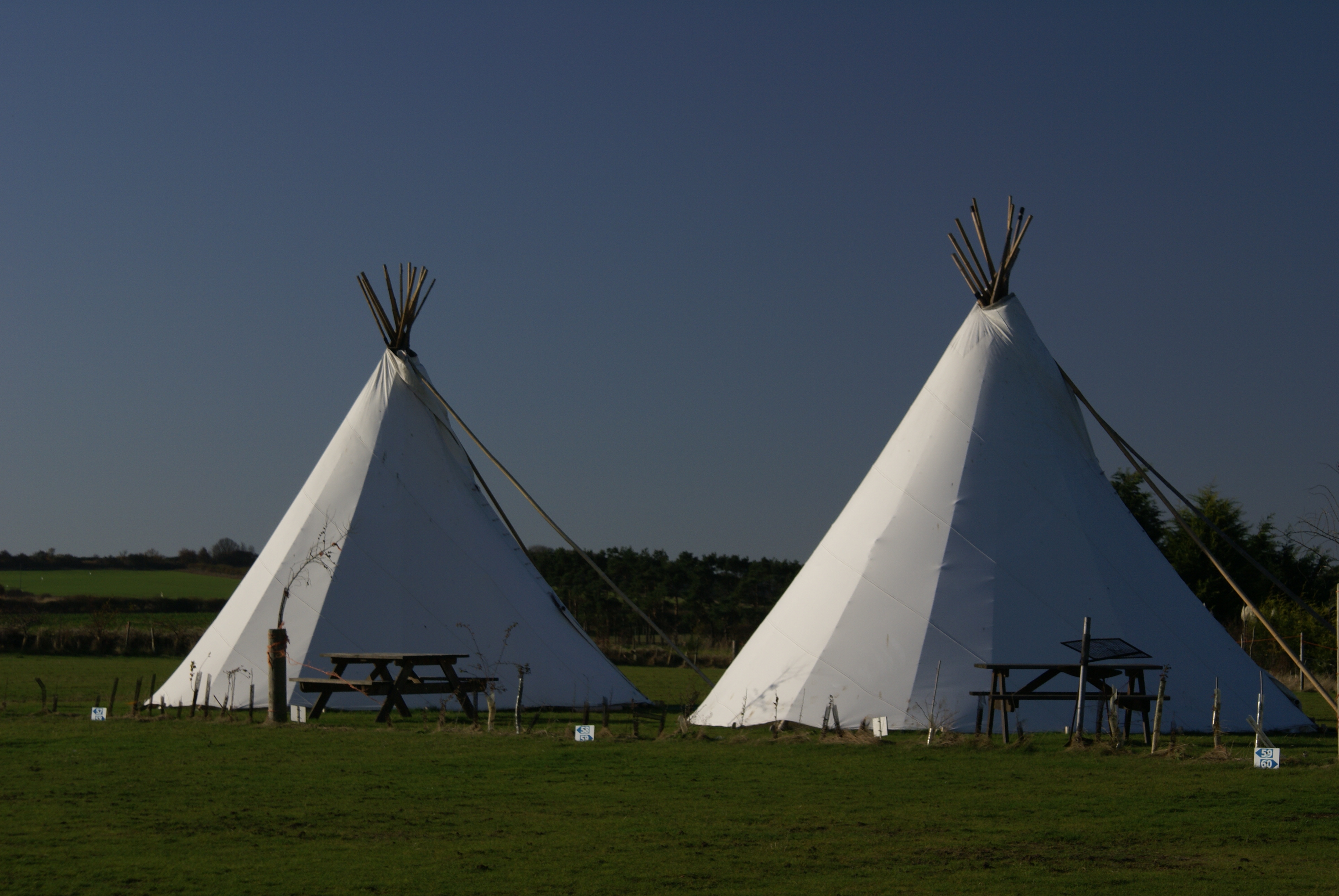 Tipis at Deepdale Backpackers, Burnham Deepdale, North Norfolk
It’s six years since we first visited North Norfolk, but the tally of visits now stands at eight and we reckon that there could be a few more. The decision to base ourselves in an en-suite room at the self catering Deepdale Backpackers hostel at Burnham Deepdale for a few days paid dividends.
We’d decided to go indoors rather than on the adjacent campsite as the weather forecast hadn’t been wonderful and my camping kit was still here, there and everywhere after moving house (we’ve used the campsite on two occasions now, and there’s no problems with it at all – quiet, relaxed and as laid back as the hostel).
So, there we were, 160 miles from home, with some walking kit (The Peddar’s Way is nearby), some food and a couple of maps and no idea of what we were going to do or where we were going to go.
Did we know what was in the area? Not really, even though North Norfolk had been featured on Coast, Countryfile and had served as one of the locations for the Stephen Fry series Kingdom. Fortunately, the reception area at Deepdale Backpackers is also a tourist information centre, so leaflets were picked up and read over that night’s evening meal/lounging around with a bottle of wine.
We’d already gathered that the main attractions of North Norfolk were the coastine and that towns and villages which are scattered along or near it.  The tide is low… Wells-Next-The Sea harbour
There are numerous wildlife sites to explore too, but the main attraction is summed up by the name of a that was the name of a shop on the main road out of Wells-Next-The Sea for a number of years – Big Blue Sky…
I’ve got back into photography and Caroline’s an artist when she’s not working as a nurse, so light can be quite important to both of us in many ways.
We’d holidayed in St. Ives and Paphos a couple of years beforehand and had appreciated the way the light changes through the day – something that I’d also noticed when driving through Glencoe a few years ago, whilst having the first coffee of the day on a campsite in The Lake District last year and in Haworth a couple of weekends ago.
Many of those staying at Deepdale Backpackers were heading off to the RSPB sites at Snettisham or Titchwell, whilst others were heading to the Norfolk Wildlife Trust site at Cley Marshes. Others were heading to Pensthorpe, a reserve site that had provided the BBC with an ideal location for Springwatch.
Now we aren’t too fussed on birdwatching, but we had heard about one regular event that was worth getting up for in the early hours of the morning. It was (and still is) the Wader Spectacular at RSPB’s Snettisham reserve.
Getting up early was a shock to the system, but after a couple of mugs of strong coffee, the car was pointed in the right direction, parked up and we headed down to the beach to see what all the fuss was about.
And we weren’t disappointed as it was one of the greatest free shows we’ve ever seen. As the tide comes in, waders such as Knot gather together before suddenly taking off and wheeling and performing aerobatics over everyone’s heads.
Around a hundred or so people were also witnessing this and every one of them was in raptures as the thousands of birds took off and flew in almost silent formation for several minutes before heading inland towards nearby lakes. It’s a cliche I know, but words can’t describe the experience, even though we’ve witnessed it three times.
Snettisham isn’t the only beach we’ve walked on in North Norfolk – those at Hunstanton, Wells-Next-The-Sea, Sheringham, Cromer and Holkham all spring to mind. Hunstanton’s is below the multi-hued cliffs whilst Wells is a fair walk from the harbour and town centre.
Sheringham and Cromer are interesting at any time of the year – unless of course it’s February or March and the temperature without the wind-chill factor is below zero! The beach at Holkham is quite possibly one that you’ve seen without even realising it.
Remember the beach that Gwyneth Paltrow walks on at the end of Shakespeare In Love? Yes, it’s Holkham Beach. It can get busy at times, especially when the sun’s out, but if the car park’s quiet then it’s a gem. As is the nearby Holkham Hall.
The gardens, grounds, museums and house are all open to the public, although it’s best to check exactly when various parts are open to the public. On the occasions when Caroline has taken her touring bike to Norfolk or she’s hired a bike, she’s loved riding through the grounds of Holkham Hall, especially when it’s early in the morning or late afternoon.
As Caroline’s a history buff (I’m more into Horrible Histories…), she went around the hall on a guided tour and spotted that one part looked familiar. On asking the guide why, it was because the hall had been used as a film set. When Keira Knightley’s character is running upstairs with her hair on fire in The Duchess, the staircase is in Holkham Hall, but the room she runs into is in Chatsworth House in Derbyshire.
Steam trains are also a part of the North Norfolk visitor experience. The Poppy Line runs between Sheringham on the coast and the inland town of Holt. It’s a short trip and once you get to Holt, there’s a bus service to take you into the town centre.
Holt may be small, but it’s a busy town, so if you’re planning on driving instead, then it’s worth getting there early as car parks fill up quickly. Although there’s a host of interesting shops in the town, one fine reason to visit is Bakers and Larner’s department store.
It’s shopping as it used to be – refined, unhurried and with a very good food hall. As a past customer of Fenwick’s in Newcastle-upon-Tyne and a one time only customer of Fortnum & Masons in London, I always ring-fence some of the holiday budget when in Norfolk in order to stock up on a few things.
At least one picnic lunch is bought, alongside chocolate and a box or three from the selection of Turkish Delight that lines the shelves. Bread, biscuits, coffee, cider and beer have also found their way into the shopping basket with the result being a bigger bill than we would get at our local branches of Sainsbury’s or Lidl!
The train’s starting (or finishing depending on which way you journey) point of Sheringham may be small, but it’s a town with a good YHA hostel (2014 was the first year in which we haven’t stayed at Deepdale Backpackers – both are equally fine hostels though!).
Apart from the steam trains which depart from a site adjacent to a Network Rail station, there’s many small specialist shops, a good RNLI shop (got to give them a plug as they’re out when others aren’t and their bags of fudge/boxes of teabags are rather good ) and a few places to get a decent lunch too. 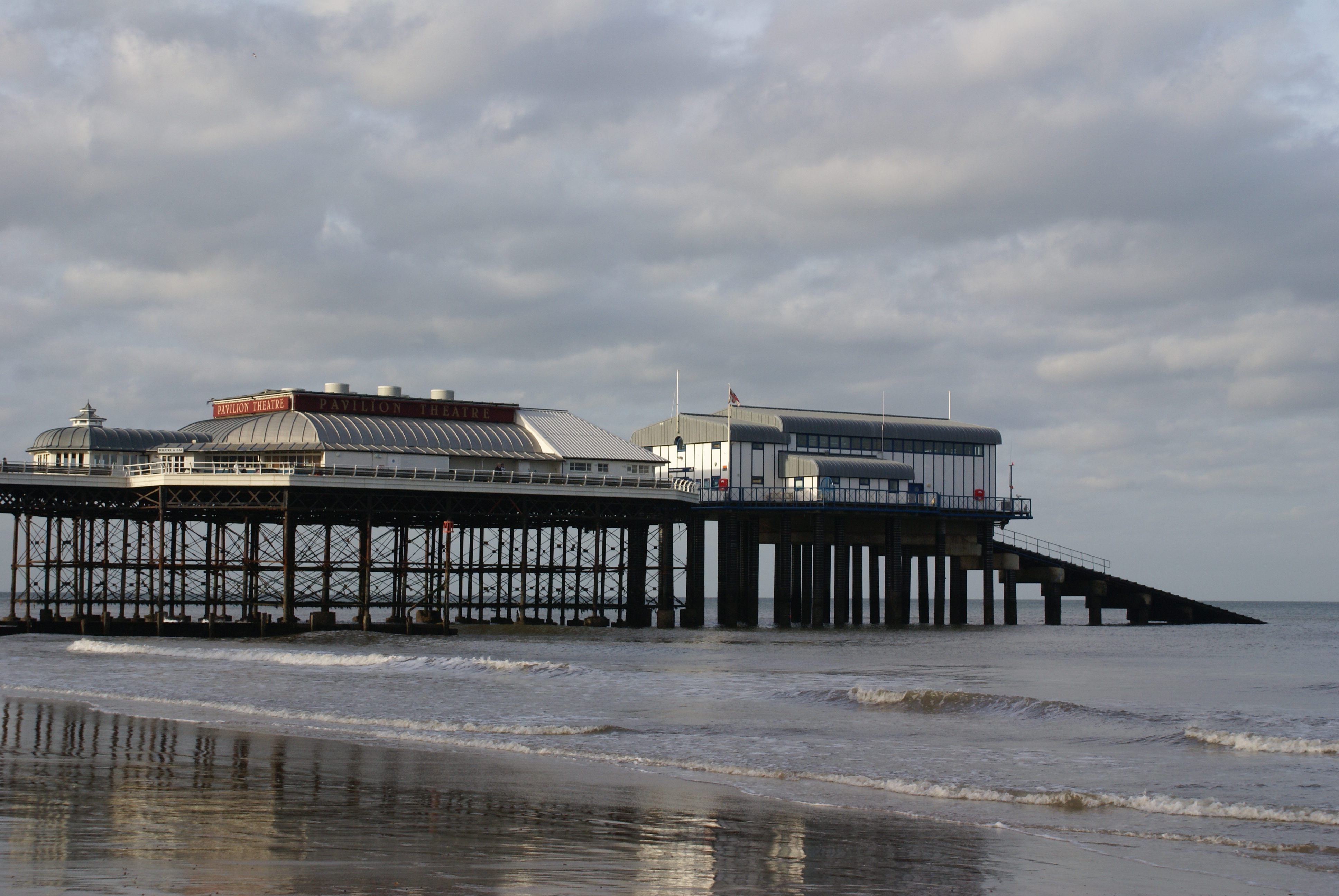 Cromer Pier and lifeboat station
Down the road is Cromer with its fine beach, pier and lifeboat station. There’s also the lifeboat museum and plenty of places to wander around at your leisure. It’s a great place to stretch your legs in at any time of the year, but with that light at its best, autumn is the personally preferred time to visit and because it’s quieter, parking is a lot easier.
Even though we’ve visited the area so much in recent years, there’s still places we haven’t been to yet.
We’ve flashed our National Trust cards at most of their properties in the area and whilst Caroline’s been exploring the houses and gardens of Blickling Hall or elsewhere, I’ve explored the North Face of the tea rooms and read a few chapters from a book or Kindle file or sat down and made notes about the trip or business ideas.  The gardens at Blickling Hall, a National Trust property
We’ve also headed out on one of Bean’s Boats from Morston Quay to take a look at the seal colony on Blakeney Point and Caroline’s tasted and bought a few bottles of different ciders from Whin Hill Cider in Wells-Next-The-Sea.
Caroline’s also explored the area by bike too on her own tourer or on a hire bike from Deepdale Backpackers. Cycle routes are well documented and signed, but Caroline also makes her own up and lets me know by phone when there’s a signal where the best place is to meet up for lunch (preferred favourite is the cafe at Holkham Hall – very good sausage baguettes, scones, slabs of cake and either coffee or interesting cold drinks).
Whilst it’s tempting to head back to North Norfolk this February, camping at Deepdale Backpackers may be out, but they do have Tipis, Yurts and Shepherd’s Huts available as whilst we have tents, we don’t have a camper van that can be parked up and used for the duration (Deepdale Backpackers do have one to hire though).
There’s always the hostel and en-suites though and there are occasional offers posted on the Deepdale Backpackers’ website. If you don’t fancy cooking then there’s a mini-market at the adjacent petrol station, a pretty decent cafe that does good breakfasts, lunches and afternoon snacks plus a couple of good pubs – The White Horse and The Jolly Sailors – in walking distance. http://www.deepdalebackpackers.co.uk http://www.yha.org.uk
This could be the start of a beautiful friendship III
After a couple of nights in Tavira, our moving on day arrived and after a short wait in the railway station, we headed off to Lagos in search of a bus to Sagres as we travelled from one side of The Algarve to the other. This was down to be the treat of the trip as we were booking into a hotel that was several stars above what we’re used to – the Pousada do Infante, part of a sixty strong group of Portuguese hotels that include buildings old and new.

Pousada do Infante, Sagres
Pousada do Infante dates back to the 1960s, but it is one of the more modern buildings. It’s the only hotel we’ve ever stayed in with its own helipad and it’s the only one either of have stayed in because we were entitled to a discount on the room rate for being over 55!
The reception staff were great, but a bit bemused by our relative lack of luggage and the fact that we didn’t have a car. They were also bemused when we were both soaked through when we asked for our room key the following day. ‘It’s okay’ said Caroline ‘We’re English, we’re used to a bit of rain now and again…’.
Sagres provided the most peaceful part of the two weeks in Portugal. The hotel was quiet, as were the local bars, restaurants and the local attractions. A morning walk to Henry The Navigator’s Fotrazela and onward to the lighthouse at Ponta de Sagres was followed by lunch at beach bar Raposo and that sudden rainstorm.
We’d also made a wonderful faux pas. Our intention had been to head to Cabo de Soa Vincente, but we didn’t make it as we’d mistakenly taken the road down to Fortazela instead. Cabo de Soa Vincente is what was initially thought to be the edge of the known world, but we didn’t make it – our mistake however does give us one very, very good reason to revisit Sagres on one of our next trips to Portugal…
Our first evening meal had been an outdoor one at an Italian restaurant, but as we were staying in a Pousada, we ate in on the second night. The meal, wine and coffee went down well and it was a cut above our usual night out at home – as was the bill.
Given that we didn’t have to check out until lunchtime, we headed down to Porto de Balleeira harbour the following morning before picking up our bags, hitting an internet cafe for orange juice, mango juice, espressos and a bit of mail checking before getting the bus to Lagos.

Lagos Youth Hostel
After two nights in a Pousada, a night in Lagos Youth Hostel was always going to be a bit of a culture shock, but it wasn’t as bad as I thought it was going to be. Caroline and I are both old school hostellers – I was on Border and Dales Regional Council in the 1980’s and did some of YHA magazine’s gear reviews in the 1990’s whilst Caroline was an assistant warden at Malham Hostel back in the day.
Yes, the room was basic, but it was better than one or two hotels we’ve been in here in the UK and a darn sight cheaper too. Breakfast portions were on the small side, but as we didn’t have to check out for a while, there was time to get a second breakfast at a cafe down the road. Coffee and a pastry filled the gap that was still there after the first breakfast, but they were also tastier than the evening meal we’d had on the night of our arrival in Lagos.
That early morning in Lagos was pretty quiet. The centre had been teeming with people before we checked into the hostel the previous night. The route to the hostel from the bus station had taken us straight down the main tourist strip and boy, it was busy. We did have a short wander around after our second breakfast to see what we’d missed, but as the visitor numbers increased, it was time to get our bags and get the train back to Lisbon.
We were pleased that we’d booked our tickets in advance at Tavira as Lagos station was busy and only one of the ticket windows was open for business. There was an hour or so to kill before our train and it was interesting to see the size of bags that people were toting around with them.
The younger crowd had the biggest bags on their backs, the thirty-somethings had wheelie bags and the over 50s were those with the smallest bags. The wisdom of the age? You might think that, but I couldn’t possibly comment!
Whilst the train from Lagos to Tunes was a local one, the narrow price gap between first and second class meant that an upgrade to first class for the section between Tunes and Lisbon was a no-brainer. This train did however terminate at a station we weren’t familiar with, so we got the Metro back into the city centre and made sure our Lisbon Viva Viagem travel cards were charged up with enough credit for the Metro ride to Lisbon Airport later on.
As it was late afternoon and it was Friday, we stashed our bags in the left luggage lockers in Rossio station (one locker for two bags – another joy of travelling light…) and headed for coffee, a stroll and then made a final decision about sleeping at the airport in readiness for a 5am check-in time.
I’d done it at Manchester and Leeds/Bradford before and Caroline had also spent at least one night sleeping on the floor of a terminal building so the plan was hatched – forget about getting a room and just go for a good blow-out meal, get the bags and head off to the airport.
So that’s what we did. No fuss, no messing and we just got on with it. Da Vinci near Rossio station was busy, but they just kept on bringing more food, tables and chairs out as almost everyone was wanting to eat outside as it was such a warm night.
The Metro to the airport was quiet, but the terminal was quite busy and it became obvious that we weren’t going to be the only ones looking for benches or comfy chairs for the night. So it was a case of Sleepless in Lisbon as the night wore on until the check in opened around 5am and we could head through to the food court in the departure area.
And yes, that was closed. We did get a couple of coffees from the Harrods coffee shop and then wandered through to the main shopping mall for Caroline to buy a bottle of ginjinha and for me to buy a bottle of Tawny Port.
Our trip was almost over, but the return visit was already being planned. It’s another fortnight with one week in Lisbon to see the parts we didn’t get to on this trip and to make side trips to Cascais and Estoril from Lisbon. After that, the plan is to visit Coimbra for a night or two and then head up to Porto to explore the city and the Douro valley – and do a couple of visits to port wine lodges to find out the story of port and to partake in a glass or two in the interests of our own research into port wine.
Travel wise, it will be local trains to Cascais and Estoril and either train or bus from Lisbon to Coimbra and then onwards to Porto before heading back to Lisbon for the plane home – unless we can fly into Lisbon and out of Porto from the north of England. Time and airline schedules will tell and no, we don’t intend to spend another night in Lisbon airport – once is enough!
Did we enjoy our trip to Portugal? Oh yes! There were places we loved, there were places we didn’t, but there were always places that we found that were stunning, relaxing and interesting. We missed out Belem and a good walk around the Alafama in Lisbon, but we did find some good eating places around the city centre.
We didn’t go for the local seafood specialities as neither of us are into seafood, but we did eat well as even the busiest cafes or food stalls offered good food and drink. And that’s why we’re going back… for more ginjinha and to try the pasteis de nata from the bakery in Belem… We did try other variations on this custard tart theme in Lisbon and elsewhere, but the ones in Belem are highly rated.
As I said earlier – this could be the start of a beautiful friendship…
 wisepacking
You must be logged in to post a comment.