In praise of… bricks and mortar stores
Although I do buy some outdoor and travel stuff online from time to time, there are times when I much prefer to head into shops to see what’s out there.
Yes, you can see what an item looks like onscreen, especially if you’re using a 22″ monitor rather than the screen on a smartphone, but you can’t get the whole picture.
If it’s a piece of clothing that I haven’t seen before, then I want to see what the fabric’s like, what the cut’s like and whether the features on the garment are in keeping with what I’ve got in mind.
If a favourite item has been upgraded or revised, then I like to see whether the changes are for the better, or for the worse. I bought a great pair of outdoor trousers a while ago and I fancied another pair of the same. Trouble is, the pocketing has been changed on the latest version – they’ve lost the cargo pocket on the right thigh and gained a smaller one on the left side.
End result? No sale, even though I know that the trousers will last me a while.
I spent a fair amount of time on Sunday last taking a look around several shops (outdoor and otherwise) as I wanted a new pair of trousers. I got what I wanted in the end – a pair of soft shell trousers with a few zipped pockets, some give on the waistband and a belt too.
Although there was an offer of ‘Buy one, get the second half price’, I passed on getting the second pair, largely because I only wanted one as the waistline is currently being reduced (if The Hairy Bikers can do it, so can I – especially as I’m losing @ a kilo per week at the moment). And besides, the store gives 10% off full price items if you have a National Trust membership card – so a £30 bill became a £27 one in no time.
So, am I abandoning purchases on the internet? Probably not, but I’ll more than likely to restrict internet transactions to Kindle books and semi-obscure DVDs that I can’t track down in local stores (Inspector De Luca, Jean de Florette, Filmed In Supermarionation, The Singing Ringing Tree or The Flashing Blade).
Bricks and mortar stores still have their place, and it will be a shame if it proves to be otherwise!
Camping Creature Comforts
Well, after several cold and clear days, the weather’s changed a bit here in West Yorkshire.
Which is a good thing in some respects as we’re probably helping someone move over the next few days and I’ve already had to pass on a visit to see and hear what Nikwax are up to because of this.
If it keeps on raining, then loading/unloading a Transit van and my car isn’t going to be a wonderful experience! Spending a few hours relaxing and unwinding in a tent on the other hand can be… even if it is teeming down for hours on end.
After an almost full week of rain whilst camping at Voss in Norway and six weeks of living on a campsite near Skipton when I first moved down to Yorkshire, I can say that the presence of some creature comforts whilst loitering within tent can make a difference.
Food and drink are always, yet always, prepared away from the tent when it’s bad weather – I’ve seen a stove go wrong before and it’s not a pretty sight. If there’s a washing up area, then the stove, pan set and food are taken there and prepared undercover.
If conditions dictate, the meal’s eaten there and the washing up is taken care of too. What does get taken back to the tent though in all conditions is a hot drink at this time of year. During the summer months, Caroline and I use basic Aladdin insulated mugs, but when it gets a bit cooler, then the slightly heavier duty stuff makes an appearance.
One of the winter mugs is the one that’s on the desk at the moment. It’s also an Aladdin mug, but it’s insulated, made from recycled plastic and has a lid with a drinking aperture that’s can be covered if you’re not taking a drink.
It doesn’t weigh too much more than our summer mugs, but it’s easier to drink out of and is currently doing a very good job of keeping some Taylors Rich Italian coffee in prime drinking condition.
An alternative to this are the flask style cups from Lifeventure. When I worked in retail, most of the staff had these to either charge up on tea or coffee when needed or to take with them on trains or buses.
They’re also available in a few different colours so if you have two, you know which one belongs to who. Caroline and I though put our tongues firmly in our cheeks when we bought our brace of these. We both went for the plain white version and if anyone asked, we just said that they were iCups…
Now I am awaiting the delivery of a couple of packs of Grower’s Cup tea and coffee as I write this and once they have arrived and have been tried out, then I’ll be writing about them. In the meantime though, it’s only fair to say what goes into our mugs whilst camping at the moment.
If it’s tea, then it’s usually made in the mug from Lifeboat tea bags sourced from the RNLI. My supplies are either bought mail order from RNLI or picked up when I’m passing a lifeboat station that has a shop attached to it or nearby (I also go for RNLI fudge too – possibly the best fudge around, but bought and appreciated in small doses rather than pigging out!).
Coffee is a different matter. I’ve already mentioned the brew of choice, but it’s made in an ‘unbreakable’ coffee press. My original one by GSI is still in use, as are a couple of more recent models by Bodum.
Yes, they go in whatever bags that go along with us and they’re a luxury item, but what would you rather have when camping or even in a hostel or hotel? An instant coffee or a full-on coffee experience?
If we’re not using the car, then Caroline and I take one small coffee press each plus the appropriate brew. If we do have the car then a larger model from M&S is packed and used.
And there’s usually one or two comments received from those camped next to us or those who are also using the hostel kitchen at the time.
It may seem decadent, but let’s face it. It’s around £10 for a large coffee press and packs of Taylors coffee are currently 2 for £5 at Sainsbury’s as I write this. Now think about how much an equivalent coffee would be in a hipster-friendly coffee shop… QED?
Mini food flasks also come in useful. We’ve both got Berghaus Food Flasks and use them as a means of keeping costs down when we head off for a day out or a week away.
Given the costs of say soup and a roll or a lunch in a pub or cafe, we fill the flasks on a morning and then feast on the contents later on. This can be in the car, on a train, in a bus shelter or back in the tent. If it’s cold and wet, the folding spoon that’s hidden in the top of the flask can be used to down soup, curry, pasta, stew, meat balls, an all-day breakfast or whatever else you care to cook up for lunch.
The end result of the meal may be from a can or it may be freshly prepared. Sometimes there’s a combination of bought and cooked fresh pasta with some pesto stirred in for good measure. Sometimes there’s food from a can that has been mixed with fresh stuff.
A small GSI chopping board has come in very useful, as has the same brand’s mini cheese grater. Fried mushrooms and onion can be added to a can of spaghetti loops for instance or mixed with freshly sliced local cheese before being used as a filling for a baguette to accompany soup or whatever else is in the flask.
The chopping board can also be put to good use whilst preparing fresh chicken and veg for a stir fry or for salad or chopping fruit to go with porridge for breakfast or fruit on its own as a sweet course. A small tub of parmesan or fresh herbs or spices for cooking can also come in useful.
Any other worthwhile camping creature comforts?
Loads I guess, but I’ll just mention a few more. A good camping pillow – either an inflatable or a small sized padded one, an inflatable sleeping mat (I bought a Therm-A-Rest twenty five years ago and have never regretted it) an LED head torch for pitching the tent after dark, cooking, finding the way too and from the loo or just reading in bed…
A silk sleeping bag liner to give added warmth on cool nights. An appropriate season sleeping bag or one up the ladder if you’re one who feels the cold (Caroline does, I don’t), hot chocolate as a night cap (with or without added alcohol!) and a charged Kindle for reading.
Creature comforts…
It’s a cool and crisp sunny day here in West Yorkshire – the second in a row in fact.
It’s on days like these that creature comforts come into their own. Caroline’s just headed out on her touring bike to get some miles under her wheels and to catch up with her son, daughter and grandkids.
As she left, she picked up a couple of pieces of kit that come into their own on such a day as today – a Buff and her SealSkinz cycling gloves.
The Buff comes in a few different guises now and has a few imitators too. The original is still the best though and the few that I have in one of the gear drawers upstairs is a testament to the effectiveness of the idea behind the Buff, the range of designs, colours or logos and the selection of variations on the theme.
There’s the original company logo version, the one for Sprayway, the one for Mountain Equipment, the Saltire one that was bought the last time I was in Scotland, the Long Way Down version for UNICEF/Ewan McGregor/Charley Boorman, the winter one with the fleece/microfibre combo and a few others besides.
They’ve been worn as neck gaiters in the summer, face masks in the winter, balaclavas, cold protection in colder-than-they-should-be retail outlets, as added warmth under cycle helmets and as hand towels, face cloths and a few things that aren’t highlighted on the information film that seemed to be running in every outdoor shop the last time I did the rounds of such things.
They’ve become almost ubiquitous – I’ve used them while walking, cross-country skiing, cycling, climbing, mooching around town, travelling and whilst serving in shops with duff heating systems too. Caroline’s used hers whilst walking, travelling or cycling and her two sons have used theirs for backpacking, climbing, cycling, parachuting or motor cycling.
SealSkinz gloves have also gained a few fans too around these parts. I first came across the original version years ago whilst doing a glove review for Cycling Plus. Yes, they were unusual to wear at first, but the combination of warmth, waterproofness and grip made them ideal for cycling, cross-country skiing and winter walking whilst using trekking poles.
The version Caroline’s using today is the insulated and waterproof take on the theme. They’ve been used over the winter months for ten years or so and yes, she finds them comfortable and useful too (she’s an all-weather cyclist as she uses the bike to get to work as she’s never learned how to drive. She also finds that she can get to work on the bike quicker than she can in a taxi when there’s snow on the ground…).
One thing that came to mind recently was how effective these gloves are. Caroline thought that she’d lost one because there was only one in her winter kit store. Luckily, the other one was at the back of her locker at work because she was about to go out and buy another pair because they had proved to be so useful to her whilst commuting or on long rides and whilst we were wandering around a very cold Prague at 6.30am one February morning in an effort to get some photos down at the Charles Bridge.
It’s on such cold days that another creature comfort comes into its own – wool base layers. I have a couple of Icebreaker and a couple of Tog 24 merino wool tops plus one by Smartwool. I also have a pair of the latter brand’s underpants too – warm, comfortable and they’re neither itchy or scratchy…
I’d been used to using standard base layers for years – polypropylene ones that honked something rotten after one day on the hill or a selection of mixed fibre fabrics that didn’t have the ability to clear a way to the bar by simply raising your arms to expose your pits!
Some brands have used merino wool in combination with other fibres and whilst it’s a good lower cost alternative, I still prefer to use a pure wool base layer instead. I’ve been known to wear those Icebreaker, Tog 24 or Smartwool tops for days at a time either at home, at work or on days out.
At one point I didn’t have access to a washing machine, so the added benefit of the items not needing to be washed at the end of one day’s wearing did come into its own.
The choice of garment that you make is entirely down to you. I have merino wool t-shirts, long-sleeved crew neck tops and also zip neck tops too. The one I decide to wear can be determined by the activity that’s going to be undertaken on the day or indeed by which one just happens to be close to hand when I open the appropriate drawer in my wardrobe.
The next layer above whichever base layer I’ve chosen is likely to be a zip neck fleece pullover. There’s a host of different fleeces to choose from in different weights of fleece fabric, but the one I’m used to wearing is inevitably one made from microfleece.
When it comes to microfleece zip necks, I don’t have a favourite. Yes, a few of them are in black, but others are various shades of blue or riff on a theme of red.
There’s zip neck items from Berghaus, Craghoppers, Peter Storm, Rab, Regatta, Rohan and The North Face in the cupboard and a couple of crew necks too by either Craghoppers or Peter Storm in there too for days or nights when a change is called for, especially in surroundings when a dress code of sorts is in action.
The other fleeces of choice are of a much heavier weight fleece. I have medium weight and heavyweight fleece snap neck fastening fleeces by Patagonia and whilst they’re both starting to show their age, I’m reluctant to part with them because a) they’re still nice and warm and b) because they’re expensive items to replace!
Like the other fleeces mentioned here, they wash easily and can be dry again the following morning. The chest pocket can take a smaller smartphone or a pack of coffin nails if you’re into such things and like the base layers or the microfleece pullovers mentioned above, these fleeces can be used as part of a decent layering system.
But the microfleece and these heavier weight pullovers do have another trick up their sleeve – they can also be used as base layers themselves when the temperatures plummet to levels lower than you’re used to. Layer up with these on and you can put the toast into toasty quite quickly – useful if you’re heating fails and you live in a Victorian era flat with single glazed windows because it’s in a conservation area!
Packing order – camping
It’a Autumn here in the UK and a mighty fine time to go camping.
Especially if the days are cool, crisp and bright, allowing you to get miles under your feet if you’re backpacking in the camping sense of the word or if you’re using a campsite as a base for either work or exploring a particular area. It’s great when it’s like this, but if it’s raining, then it’s not so great.
I love camping in the Autumn and spent around six weeks doing so in the Dales when I first moved down to Yorkshire. It was a cold October and I was pleased to have a good tent and a few good sleeping bags around to deal with the colder conditions (it was a fluke that I’d been asked to do a three season sleeping bag review for a climbing magazine, so the bags were given a good run for their money!).
I’ve had wet weekends in the Lakes and a spectacularly wet week in Norway when it rained every day until the one where I was leaving Voss behind and heading back to Bergen for the flight home.
It is possible to pack light to deal with such conditions. There’s loads of lightweight kit out there – tents, tarps, sleeping bags, sleeping mats, stoves, cookware, plates, mugs and cutlery that can deal with most eventualities.
Some are reasonably priced and readily available whilst others are aimed at more niche markets such as mountain marathon usage. I’ve used tents by Terra Nova, The North Face, Crux and Macpac, packs by OMM, Berghaus and POD, sleeping bags by Terra Nova, Rab, PHD, The North Face, Anjugilak and Snugpak and stoves from MSR, Primus, Coleman and others. All of my stoves are gas ones – simple and reliable.
Sleeping mats have ranged from a 36 year old Blaxmat to a good ol’ Karrimor Expedition foam mat to self inflating mats from Therm-A-Rest, Gelert or Millets.
Cookware on carry everything trips is usually a small Tefal pan set (there’s a larger one for car camping), the mugs are Aladdin insulated ones and cutlery can be from Spork or MSR depending on whether I’m going for plastic stuff or titanium (good, but a bit more expensive…). The plates? 4 for £1 in Tesco’s end of picnic season sale!
Cooking tools have come from GSI or MSR – cutting boards, folding spoons or spatulas etc and the sharp knife is either a Swiss Army Knife in the UK or whatever blade I can pick up cheaply and ditch elsewhere – I’ve had a pack sliced open before when someone in an airport decided to open up my bag to take a look inside it and didn’t do a good job of repacking it afterwards… I did get a new pack out of the airline though!
Water bottles are either Nalgene or Platypus and as I’m more likely to be filling these in lower risk areas, I use sterilising tablets or droplets to clean up any water taken out of streams. The roll-up Platypus bottles come in useful whilst travelling too and the Nalgene items can be used to rehydrate food on the move too.
Camping food is whatever I can get from a local store before heading off. I don’t read or speak Norwegian, but even I can understand what to do with the local version of a Pot Noodle or open a can and scoop tuna into said noodles or empty a can of burgers, hot dogs or other identifiable fodder into a pan and warm it through.
Yes, I did use the word can there. Although I use some dehydrated foodstuffs and bags of wet rations that can be eaten cold or heated up, I still carry cans around, largely because of something that resonated with me when reading accounts by Hamish Brown of his walking exploits here in the UK.
His reasoning for taking cans was that the weight of carrying canned food was offset by the amount of stove fuel that could be used to ensure that dehydrated food was heated up and cooked though properly. My use of cans is also down to student days as canned food is much cheaper than specialised fodder and the portion sizes are usually bigger too.
My wash kit is a basic one – bottle of shower gel bought locally, a small travel size toothpaste or a combined toothpaste and mouthwash mix and a plastic encased roll-on anti-perspirant. Insect repelling is usually taken care of with Avon Skin So Soft moisturiser and yes, it’s okay to wear sunscreen…
As ever, the ubiquitous travel towels are packed too, but not a comb or brush as I usually get a number 4 cut before heading off on a trip – dries quickly and needs no maintenance!
Clothing choices depend upon the conditions I’m likely to be facing and apart from what I’m wearing, there’s usually two spare base layers in the bag, two pairs of undies, two pairs of socks, one of trousers and a pair of Ronhill Tracksters – great for mooching around in or for use in the sleeping bag on cooler nights.
Emergency kit is simple stuff – first aid kit, Petzl Tikka Plus head torch, big orange survival bag and a whistle. My paper maps are in an Ortlieb A3 size map case, as is a Silva Expedition compass. The only tech that goes along is the Kindle as most of the places I get to have little in the way of 2G phone reception, never mind 3G, 4G, 4G+ or 4.5G…
What you take along and pack is up to you. There are those who pack as light as they can for trips, even if it’s not a mountain marathon. My own choice may surprise you as it’s what is appropriate for the trip and the conditions likely to be encountered.
I’ve spent 36 hours in a Gore-Tex bivvy bag or a battened down the hatches tent when the weather’s changed and slept in a survival bag when a thunderstorm hit and it would have been a daft move to start playing with metal tent poles. So I pack for the unexpected!
I’ve still not carried more than 14kg – and that was in the early 1990’s before some of the lighter, more technical stuff came along. Nowadays I reckon that it can be done on a lot less, without compromising on the comfort factors or the ability to cope with any unforeseen circumstances weather wise…
Packing order…
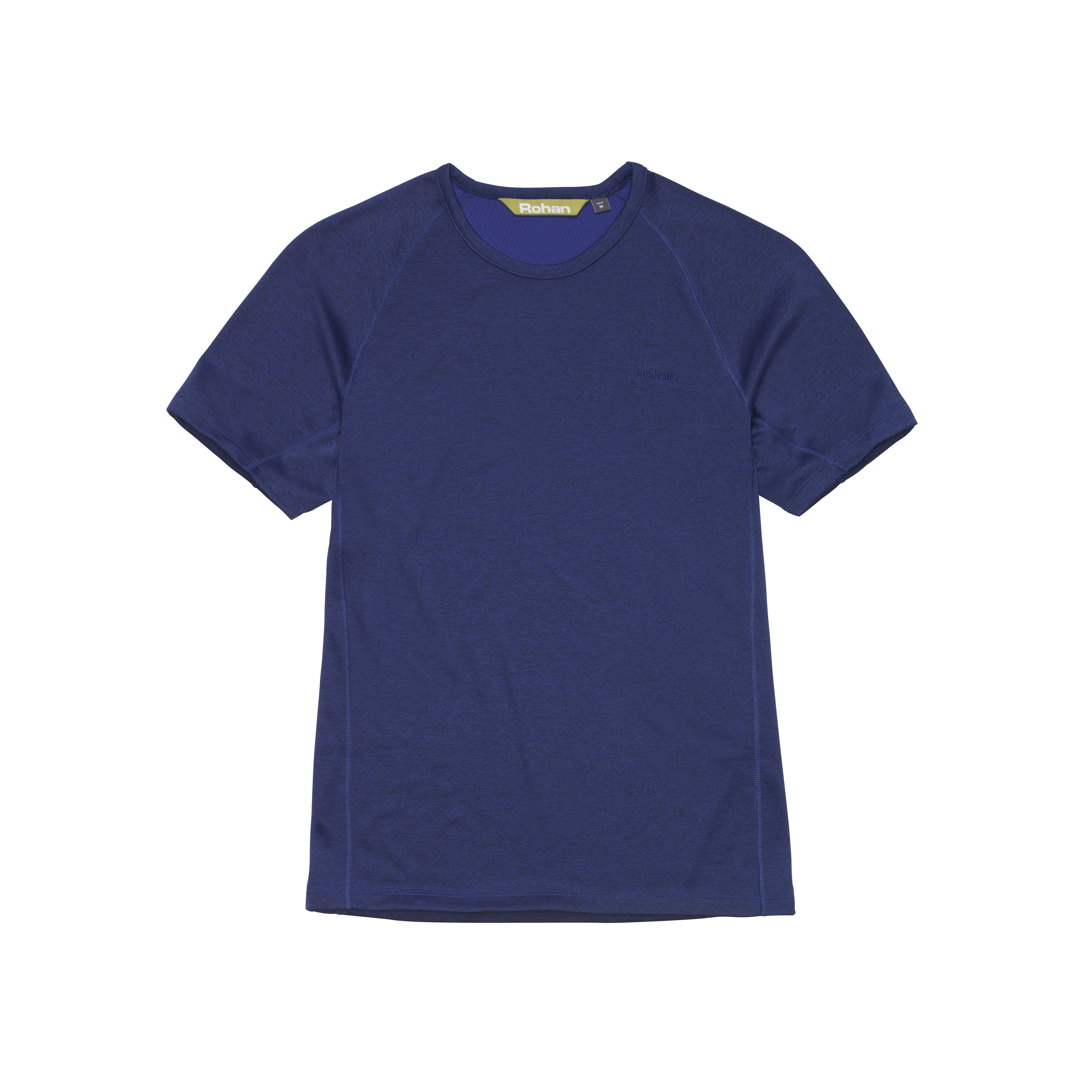
Rohan Core Silver t-shirt
If you’ve read Packing Lists below, you’ll have noticed that there is no ideal packing list to follow, largely because of the variables between each trip and your own foibles when it comes to packing.
Caroline and I have different approaches when it comes to packing – she will pack the day before (unless she’s on shift) and do the whole lot in one go.
I do the list about a week before, loosely pack the bag a couple of days later and then pull it all out and throw some things out and put others in depending upon whether the forecast is going to be good, bad or totally rubbish…
For the most part, my packing list for a week away is about the same as it is for a fortnight and it would also be applicable for a trip lasting a month or more.
It’s not far removed from the contents of the bag in the car when I first moved to Yorkshire – and based myself in a tent on a site near Skipton for the first six weeks down here.
On that occasion, I had to pack both work clothes for the store I was managing at the time and casual stuff too. It was also early Autumn, so some cool weather clothing had to be considered, as did stove, pans, food, a three season sleeping bag and a decent semi-geodesic tent.
But I digress…
If it’s an overnight or a weekend trip in a hostel, guest house or hotel then the bag is either an elderly Lowe Alpine 20L climbing pack or a large – 15L – Healthy Back Bag.
Clothes are usually what I’m stood up in with a spare t-shirt, dress shirt and spare socks & undies in the bag. The trousers are usually a dark colour and made from a fabric that can be sponged clean if they’re splashed with drips of gravy, bolognese, chilli or curry sauce or have been attacked by low flying red, red wine.
My jumper is usually a fleece zip neck and if the trip is in a cool or cold month, then there’s a Berghaus or Peter Storm fleece gilet on too (if it’s really cold then a down gilet by The North Face or a synthetic gilet by Patagonia takes the place of the fleece one). Under the jumper is usually one of those Rohan Core Silver t-shirts…
Travel jacket is usually a decent waterproof with a hood in the collar.
This has been an ultralight one in the past, but both have just died last year (after about five-six years of hardish use) and have been replaced with slightly heavier duty ones by Berghaus and The North Face.
The Berghaus RG Gamma is a longer length jacket that suits smarter places while The North Face Resolve is a shorter, more casually styled jacket.
If it’s cool and likely to be dry, then the waterproof jacket is swapped for a soft shell, typically an Elixir lightweight soft shell by The North Face or one of the same brand’s discontinued heavier models that has a hood attached to it.
If it gets really cold and is dry then a down or Primaloft filled jacket is used instead. I’ve not had too many problems with wet down jackets, but there are now some down items around that can resist wetting without having to resort to the use of a heavier waterproof shell on the outer surface as a means of resisting damper conditions.
This combination of different clothing works well, because it’s invoking layering principles to keep you comfortable, warm and dry. The more layers you wear, the warmer you are as air is trapped between each of these layers. As the air warms up, you feel that little bit toastier.
If it’s a week, fortnight or longer away, the rule of threes starts to apply for the contents of a slightly bigger bag such as the Osprey Farpoint 40 I’m using at the moment.
Three t-shirts, socks and undies (one to be worn next, one washing and drying and one that’s clean and ready to air) go in the bag along with a spare pair of trousers, spare shoes, boots, Crocs or sandals as appropriate.
There’s a minimalistic wash kit – hotel stuff’s used for showers etc if it’s provided rather than using my stuff – and there’s a large and a small travel towel in there too.
The travel towels are obvious, but, as I’ve mentioned before, they also come in useful when it’s clothes washing time as damp clothing can be rolled up inside a towel to get moisture out before being hung out to dry.
Personal meds are included along with paracetemol, indigestion tablets and a few sachets of recovery powder. All are for my personal use as I’m aware of the legalities of handing meds over to someone else to take – Caroline’s a nurse and even she takes her own paracetemol with her in case she needs some.
The BIG disclaimer here is that you should respect ALL medications and be fully aware of the medication’s properties, dosages and potential side-effects or pitfalls. I’ve had to deal with overdoses during my days of helping to look after a student hall and they’re not pretty sights… Let common sense prevail at all times (the joy of doing liability law as part of my degree course…)!
As I’ve mentioned before, we’re not big on taking tech things, but we know a few who do. Some have even packed their tech stuff before realising in the departure lounge that they need a guidebook for the place they’re heading to and that it may be a good idea to tell their bank that they’re leaving the country for three months or more!
A book or a Kindle’s fine for us – Caroline packs a smartphone, I don’t. And let’s face it, it’s not that long ago that smartphones, tablets or netbooks didn’t exist!
So what do we pack when we go camping?
That’s the subject of the next post!
Rohan Core Silver t-shirt image courtesy of Rohan
Packing lists…

Durdle Door, Dorset
You can ponder the subject forevermore, but whilst there are many suggested packing lists out there on the internet and in guidebooks or ‘how to’ tomes, there is only one that counts.
And that’s the one you need to write for yourself as you plan any kind of visit, be it a night away from home, a couple of weeks in the sun, a trekking venture or a circuit of the globe.
If you’re booking a walking or an adventure travel holiday as a package deal, you will inevitably get a packing list sent to you, but in some cases, I’ve seen packing lists with less than helpful advice on footwear for example.
If on the other hand you’re heading off on an independent trip then the onus is on you to sort out what to take with you before you even book your travel ticket.

Tavira, The Algarve
Do you need a big bag with you for the trip that you’re proposing?
Or will going hand luggage only be a better idea that will save you some cash which will pay for a couple of night’s accommodation, a couple of train journeys or a few meals out?
Keep the bag small and light enough and you may even avoid the departure gate pack-size crate of added charges or any weight penalties. It’s all about doing your homework and getting the balance right about what you need and what you think you need.
Even though I’ve been heading out for years, I still take time out to pull together a list of what I need to pack for most trips. A few things are taken into consideration when I start putting the list together…
What are the weather conditions likely to be – warm? Cold? Wet? Dry? Snow? Or teeming down? Or a mixture of just about anything you could mention…
Will it be t-shirt weather? SPF shirts? Base layers? Fleece? Down? Soft Shell? Waterproofs? An umbrella? Shorts? Jeans? Techno trousers? Soft Shells? Capri Pants? Ronhills?
Are there likely to be any local considerations about covering up in temples etc? Or dress codes in the kind of accommodation you’re likely to be using? Can you wash & wear in your digs as you go along or do you need a launderette?
Are you likely to be taking part in any specialist activity that you’re interested in? Can you hire any specialist kit locally? And will the clothing that you’re thinking of taking along be suitable for any activity?
What kind of terrain are you likely to be covering and will your footwear choices be appropriate for this kind of terrain? Boots? Shoes? Sandals? Flip Flops? Crocs?
Can you get shower gel, shampoo, contact lens solutions, paracetemol, aspirin, ibuprofen, deodorants, sun cream, after sun, razors, or batteries?
Or repeat prescriptions while you’re on the road (a potential minefield as what can be prescribed in one country may be frowned on in another). Or replacement specs when your best pair breaks and you’ve forgotten to pack a spare pair? Top tip? Always pack a spare pair (especially if you’re a contact lens user) and a copy of your most recent prescription.
And just how much tech are you taking with you? Interesting pointers came to my attention recently when I read a 2013 Wanderlust interview with esteemed travel writer Paul Theroux – ‘Never carry anything that needs a battery’ and ‘Leave the camera at home”.
Food for thought? Quite possibly…

Evora after dark
Yes, it’s a big set of considerations to put into the melting pot, but doing the research and putting together a list helps you to make decisions that are appropriate to you and the trip that you’re undertaking. And that’s without mentioning any paperwork that needs to be taken with you on your journey.
There’s a few hints on older posts here on wisepacking that may give you some further pointers, but remember, it’s my opinions and hints that are on here and you may or may not agree with them.
Which is fine, because everyone’s different.
The joys of planning loosely…

Booked in advance – Pousada do Infante, Sagres. Posh, but rather good (and they did discounts for those over 55!).

Booked on the road – Pousada de Juventude, Lagos. Basic and a bit like UK hostels used to be (no bad thing that!).

Political demonstration in Lisbon city centre on a Friday afternoon. Lots of views, but no aggravation at all.
It’s been interesting to see how many people go onto travel forums expecting others to come up with suggestions or even a full itinerary for the person that’s posting on the site.
Laziness on the poster’s behalf? Yep… and a lack of imagination too if poster can’t be bothered to think of a country or area to visit.
The other good one is posting a long list of places to visit in a ridiculously short time scale rather than thinking about it and doing their own homework about what can be achieved, seen or visited in that time scale without spending hours on buses or trains.
As I’ve mentioned before, I’ve headed off to foreign climes at two days notice when the weather here in the UK turned inclement.
Or hit the hills around Mayrhofen after booking a week’s half board in a three star two weeks beforehand. Or planned road trips around the Norwegian Riviera and the area south of Lisbon at six weeks to six months in advance of the trip taking place.
Planning a trip isn’t that hard to do. Yes, you can get a package deal, but you may be paying over the odds for that privilege. There’s a host of printed material out there from Lonely Planet, Rough Guides, DK, Berlitz and others to help make up your mind as to where to go in the time allocated to the journey and the initial budget for the trip.
Most of the posters on the forums mentioned earlier have been advised to forget about using the internet by self and others in the early days of planning their trip and hit a library, book shop or charity shop to get a paper guidebook or two (or three if there’s a 3 for 2 offer on the go) and read it to get an idea of what’s on offer, what the guidebooks have in the way of suggested itineraries or what’s feasible at the specific time the trip is likely to take place.
When you’re reading the book or books, it’s worth having a notepad and some Post It Notes by your side to make notes of places, accommodation, activities and travel modes that appeal to you or to mark any interesting facts that you’ve found in the book. If the book is mine, then I also have a fluorescent highlighter pen to mark up items of interest.
I’ll undertake those same processes in a rival’s publication and then compare and contrast what’s said about towns, cities, attractions and hotels, guest houses, posh gaffs or hostels.
If a place is mentioned in two or more guides, then I’ll investigate further and that’s where the internet comes in, especially when it comes to booking the flights and the first and last night’s accommodation.
Sometimes this works and sometimes it doesn’t – we’ve stayed in a couple of ‘Art Deco’ places in recent years in both the UK and elsewhere and as a result of my visits, we’ve come to regard any comments about ‘Art Deco’ in accommodation listings as more like ‘In need of renovation’…
Places of interest are investigated as are festivals or any events that could impinge on travel or accommodation availability over the period that I’m likely to be in the area.
Public holidays play their part too – I’ve been in towns and villages that have been packed on public holidays and had to cope with it taking double the usual time to get home and have visited or worked in cities where the only place that’s busy is the local retail park…
Another pointer to consider is whether you’re making the trip on your own or whether your partner or a friend is going along too. It’s great to do your own thing, but if it’s not your partner or friend’s thing then Houston, we have a problem.
When I’ve done some reading up, Caroline is encouraged to read through the guidebooks as a way of getting her thoughts and preferences on where to go and what to see or do.
Compromises may be made in the loose planning of the trip or even on the day – if Caroline wants to visit somewhere that doesn’t interest me, then she goes into a gallery, museum, cathedral or church to see what it’s about and I’ll go and have a coffee, a beer or just sit and read until she reappears. Simples!
When it comes to using the internet for research, then it’s a good idea to have specific questions in mind when posting on forums as a means of gleaning advance information.
This could be about first or last Metro journeys to the airport, availability of ATM’s, medication, vegetarian or vegan food if it’s not mentioned in a guidebook, the cost effectiveness of travel passes or whether a car hire or tour company is worth doing business with.
There are times when you get some real berks or right trolls adding their ‘comments’ to the equation, but for the most part, fellow travellers will help out wherever they can to give others the benefits of their collective experience. Some may have visited your destination recently or may even be there at the moment as either a visitor or as a resident.
Once done, then it’s time to do that loose planning. Have the basics and the aspirations sorted before you head off, but leave time and space to go with the flow and to make things up as you go along, especially if things don’t go to even the loosest of planning.
We had to sleep in Lisbon Airport last year before an early check-in for our flight back to the UK. We’ve spotted Norwegian news bulletins about fires on the main Bergen-Oslo railway line and ended up dodging political demos too.
We’ve also found some gems too – cafes, restaurants, attractions or views just by looking at local noticeboards or by simply wandering around. It all adds to the fun and to the overall experiences!
But once that loose planning is done and you know roughly where you’re going to go and what you may or may not be doing, there is once thing left to do – draw up your packing list. Which is where the first of next week’s postings may come in handy!
In praise of … Osprey Farpoint 40 packs

When Caroline and I were looking for travel packs last year, there were a couple of contenders.
At the time there was a lot of chatter about carry-on luggage on Lonely Planet’s Thorn Tree Forum and the name of the Osprey Farpoint 40 kept cropping up, so I investigated.
The size and capacity of the Farpoint 40 matched the criteria I was looking for and whilst I would have preferred to have bought it in a bricks & mortar store, I couldn’t find a local stockist that had one in at the time… so I hit the internet.
As I’d been used to getting packs through the post to test for a variety of magazines over the years, I was used to trying on and assessing packs from cold rather than trying on as many as I could before making my mind up and prising the card out of my wallet.
So the order was placed for the black version of the Farpoint 40. I got it, filled it, tried it and gave it a good going over before I showed it to Caroline. She took a look at it, tried it and looked at it again and decided that yes, she wanted one! In blue…
Both of our Farpoint 40 bags proved themselves a few weeks later – two weeks in Portugal travelling hand luggage only on TAP Portugal who have an 8kg carry on weight limit.
As the trip involved a mix of accommodation that included guest houses, small hotels, pousadas and hostels, we had to pack accordingly in order to kind of stay in the expected dress code for the pousada nights in Sagres.
End weights? Caroline’s bag came in at 6kg, mine at 7kg (I had the guide book and the charges/adaptors for our Kindles, cameras and Caroline’s smartphone). The beauty of the Farpoint 40 is down to the care and attention that’s been put into the design and construction of the pack.
The back panel unzips and rolls away to reveal a pack harness with adjustable shoulder straps, hip belt and chest strap (that incorporates an emergency whistle). The main section opens to reveal a space that takes enough wash & wear clothing plus a spare pair of footwear to last a weekend, a week, a fortnight or longer.
Compression straps are fitted to cinch in the contents of this section and there’s a large zipped mesh pocket to help keep worn and unworn clothing separate from each other.
The flap on the front of the pack opens to reveal a laptop or tablet sleeve that’s both zipped and padded, an organiser pocket behind this that can be used for paperwork, notepads or sketch books whilst the space in between this tech sleeve and the pack’s outer surface can be used to stash snacks, guidebooks, tissues, suncream or body sprays for use during the day.
On the outside of this section is a top pocket that I’ve used to hold my liquids bag, my meds bag, my camera and my keys before heading into airport security. Once there, it’s a simple matter to place these in a tray for examination and X-Ray and to put them back afterwards.
Also on the outside of the bag are two mesh bottle pockets and two compression straps that can help with the bag’s packed sizing, a useful measure in the event of being faced with an airline’s pack size cage at check-in or the boarding gate.
All of the zips on the Farpoint 40 have extended zip pullers and those for the lockable main zips are large enough to use with gloved hands. The top pocket mentioned in the last but one paragraph can’t be locked on my example of the bag, but once I’m out of the plane and the airport, any contents are placed inside the main body of the pack for safe keeping…
Caroline’s version of the Farpoint 40 is a slightly later model than mine as hers has a removable shoulder strap to help carry the bag without opening the back panel to use the main harness. There are however good grab handles on the top and one side of both of our bags, allowing for easy pulls out of overhead lockers or a coach’s cargo bay.
All of these features combine to form one of the best bags that I’ve used in the last few years. I have another 40 litre travel bag and a larger 60 litre one and I have sold a variety of similar sized travel bags too, but nothing really comes close to this one. Is it a perfect travel bag? Could be…
Both of our bags were easy to shoulder and walk with last year, a factor that ensured that we only took one cab during our time in Portugal for example. All we did when we got off a bus or train was to reveal the harness, sling the bag over our shoulder and walk. Organising the contents in each bag was easy using the compartments and the pockets.
As we don’t carry too much tech, the padded sleeve came in useful for paperwork filing – papers such as plane tickets, hotel confirmations and travel times or maps were in the sleeve whilst the polythene folder with the older stuff or the papers to use later in the trip were stored behind that sleeve. I also used a set of Rohan packing squares to provide a bit more organisation to the proceedings.
Do we like our bags? Oh, yes. So much so that they’re also used when we’re heading off at home too. They’re packed and then slung in the back of the car. The size and capacity of the Farpoint 40 bags ensure that we’re not overpacking for a week away as we have found out that less can be more… and that concept works too!
The price? UK price is £80.
Find out more; UK details – http://www.ospreyeurope.com/gb_en/pack-selector/farpoint-40#.VEfAPla0ZZg
Osprey Farpoint 40 image courtesy of Osprey via Spring PR – thanks!
Long shot… write the bucket…
I don’t know why, but for some reason, the subject of bucket lists appear to have come to the fore over the last week or so.
There’s been comments on various websites about them, there’s a listing on the Kindle store for The Unique Travel Bucket List by Danielle Renner (just bought it at lunch time and am a few ‘pages’ into the book at the moment) and there’s even been a mention of bucket lists on a repeat episode of NCIS too.
Do I have a bucket list? Kind of, but it’s not as long as it used to be, largely because so many things have been ticked off over the years that just happened and were never planned too far in advance.
I’ve managed bands, I’ve photographed a few rock acts and have interviewed a few singers, musicians, actors, writers and comedians for a variety of magazines.
Heck, I’ve even met a few mountaineers, politicians and Radio One Dj’s too – and sang live on the Radio One Breakfast Show (thankfully as part of a crowd, rather than solo!) and chatted with Cy Grant, a singer and musician that may be better known to those of a certain age as the voice of Lt. Green in the original version of Captain Scarlet…
I’ve been filmed photographing Madness, reviewed films in print and on TV (thankfully that show is not on You Tube – I’ve checked!), I’ve been seen on The Tube watching The Smiths during their last appearance on that show and been deafened for four days by a certain metal band who shot a video whilst playing at Newcastle City Hall (you’d need some pretty good software to find and see me).
As far as travel goes, I’ve got to most of the places that I’ve wanted to get to. I’ve had to rule a couple of places out for health reasons though as I can’t go diving after having a collapsed lung a few years ago and suspect that heading to the Himalayas may cause problems too after that collapsed lung and stroke ten years ago.
I’ve headed to Norway a few times now (11 to be precise) in the Spring, Summer, Autumn and Winter. I’ve seen The Northern Lights over a stave church at Lillehammer, looked down over Bergen harbour after dark from the top of the Floibanen and headed out on cross country skis around Geilo, Trysil, Beitostolen and Lillehammer.
Yet I still want to go back there. Plans to take a Reliant Robin up to Nord Kapp came to nothing about twenty years ago (don’t ask!), but I want to show Caroline what Norway’s like in the winter months. I also want to get up to Trondheim and above as we didn’t get up there last time we were over there. And I’d also like to head up the coast on the Hurtigruten service at some point too.
I’ve been to Iceland and want to head back there as well. It’s a while since I last visited, but there’s unfinished business across there. Two weeks wasn’t enough to explore that country properly, even though I had a hire car at the time. Places were missed or left behind after too short a stay, so I’d like to spend a month over there from mid-September onwards.
Why then? Because of the light, the colours and how quiet everything is. It’s an amazing country and I want to do it justice this time. It can be cold, there may be snow, but to honest, I don’t care. I may not get into the interior, but again, that doesn’t really bother me, because I could go back there earlier in the year to do that…
Plans are already afoot to go back to Portugal. Not for an activity holiday, but to relax, unwind and explore. We spent a fortnight over there in September 2013 and were quite relaxed, chilled and contented as we sat on the terrace seats of a bar overlooking Lisbon just 24 hours after I’d done my last shift for the employers I’d fired a couple of weeks beforehand.
We’d like to head over to Switzerland too, but do it by train rather than by air. Idea is to put a tent up at Interlaken and then explore from there. I did this in the 1980’s, but want to do it again, just for the hell of it.
The combination of scenery, cities and the Swiss railway system make it all possible – even if the journey through the Eiger is still one of the most expensive rail journeys in Europe. I suspect that I did it before Michael Portillo (I stand to be corrected on this!), but hey, it’s worth doing it again, even though my wings have been clipped a bit.
Other destinations to revisit include Cyprus, the Jura, Andalucia, Ireland and Austria. Some destinations are worth being a tourist for, others as a walker. Orkney in good weather would be another one on the list too as it poured down the last time we were up there.
New ones on the list would be crossing the States by train and then spending some time in New England in the fall (corny I know, but one to try out), journeying to the Greek Islands, cycling in the Netherlands, touring Italy and taking a week or two to explore Sicily.
Yes, the last ones are inspired by TV programmes – Francesco Da Mosca‘s journey by Alfa Romeo and Inspector Montalbano respectively – but they fairly and squarely hit the spot. And after all, it wouldn’t be the first time that we’ve travelled after television provided the inspiration.
We watched Julia Bradbury’s Icelandic Walk programme one Saturday night and discussed it the following day. Whilst we couldn’t afford to hit Iceland on the break that we had six weeks later, we did a bit of probing and got reasonably priced flights to Oslo instead.
The ten days in Norway were great and we thoroughly enjoyed travelling by bus, train and hydrofoil. By the time we got home we were nicely chilled and relaxed, but one week later, we were pleased that we’d travelled when we did as all hell had broken loose in Oslo just a few hundred metres from where we had been staying…
Would we go back again? We’d have got the next plane out if we’d had the money and the time off – only problem was that we’d spent up on our ten days over there. £8 for a beer and £43 for two pizzas and two soft drinks in a place in Oslo kind of hit our combined spending power somewhat!
In praise of… paper guidebooks
Okay, I hear you ask, why go for paper guidebooks rather than those on a Kindle, iPad, iPhone, Android phone or tablet, laptop, desktop or one of the other electronic book formats?
Because I (and a few others judging by recent comments on Lonely Planet’s Thorn Tree Forum) prefer to use paper guidebooks rather than techno ones. I have a couple of guidebooks on my Kindle and one on my Mac Mini, but there’s at least two book shelves full of paper guidebooks either on the landing or in the office at Wisepacking Towers.
I’ve been using Lonely Planet books for about fifteen years now and still have that first one upstairs – Andalucia. It proved to be useful during a week’s walking holiday as it gave me some background into the area, the customs, the food and a few places to head off too on the day off from walking (apart from The Alhambra).
I’ve also bought a few Rough Guides too and a couple of DK Eyewitness guides for good measure. I’ve doubled up on guides a few times now whilst planning independent or semi-independent trips abroad. The first occasion was after booking a very last minute week in Paphos – the booking was made on a Thursday and the flight out was the following Sunday.
As we were also in need of hot weather clothing (we’d been planning a camping trip to Wales, but the heavens were well and truly open – and the forecast was for even more rain), we headed over to the retail park at Birstall, got some extra white t-shirts, sun hats etc and called in on Borders Books to get a couple of guidebooks.
The haul ended up being Lonely Planet’s guide to Cyprus and the comparable volume from Rough Guides. We both took a look through each guide and came up with a list of where we wanted to go and where we fancied dining out at. As the holiday flights included hold luggage and we had accommodation booked, that’s virtually all we used them for.
We did make discoveries of our own too that added to the nature of the trip and booked a couple of day trips run by a local company. Yeah, the only coffee shop we found in Paphos with air-con was Starbucks, but at the temperatures were hitting 43C, some principles had to be set aside for a week.
Although we’d booked that package at short notice, we’d also tailored it to our own tastes because of some of the recommendations in the guidebooks and also because we’d stumbled upon places ourselves. We’ve used the same idea on other accommodation/travel packages to Prague and Bergen, but as far as the latter goes, most of the places there were a known quantity as I’ve spent so much time across there.
So, I’m hooked on paper guidebooks… Why? Because they’re so much easier to use either at home or whilst away in the country we’re exploring. We headed over to Portugal last year and whilst I did download a sample of the LP Portugal book onto my Kindle, I bought both the LP and Rough Guide to that country, as I’d seen a few user comments about that edition of the LP Portugal guide that weren’t too complimentary (I’m pleased to say that the 2014 edition of Lonely Planet Portugal is much, much better!).
I’ve found it easier to use the index to find the page or section that I’m looking for. I’ve marked pages by adding Post-It Notes in the right place and used a fluorescent yellow highlighter pen to indicate places of interest, places to stay or places to eat. If those places have featured in both the Lonely Planet and the Rough Guides books, then so much the better as two recommendations are better than one.
I’ve become frustrated at the time it takes to find and then pull up the right pages on the Kindle and on the Mac Mini, so much so that when I’m doing any research for a holiday, it’s now predominately done by reading the guidebooks first, marking up the pages or making notes and then either copying the appropriate pages to take with me or shoving the guidebook into my bag as a reference source on the ground that doesn’t rely on a wi-fi or phone signal or a battery charger to work.
Using the book has another advantage. Yes, it still marks you out as a tourist if you’re not looking at it in your hotel room, but it also acts as a bit of deterrent to those thieving toe-rags who like to relieve people of bright, shiny pieces of technology. The book may be heavier, but it’s funny how there are times when the book just falls open in the right place either of its own accord or because you know which one of the Post-It Notes you need to aim for!
Yes, I use tech sources to book accommodation, find out about local events or to find up to date travel times, but that’s all done at home before I head off. I’ll also do a weather check on the BBC website to get an idea of what to pack too. Once on the road though, it’s books, eyes and ears time – with a little bit of asking for help locally thrown in for good measure too!
Can the paper guidebook be improved upon? Only in one respect at the moment. As travel becomes that thing you do, it’s become noticeable that guidebooks have moved to feature more upmarket places to stay, eat or frequent and it’s the establishments at the lower end of the price scale that are disappearing from the pages of the guides.
Personally I’d rather stay, eat or visit affordable places rather than even look at the menu of a place bearing the name of a celebrity chef, try to get into a super club or pay over the odds to go around a theme park!
 wisepacking
You must be logged in to post a comment.